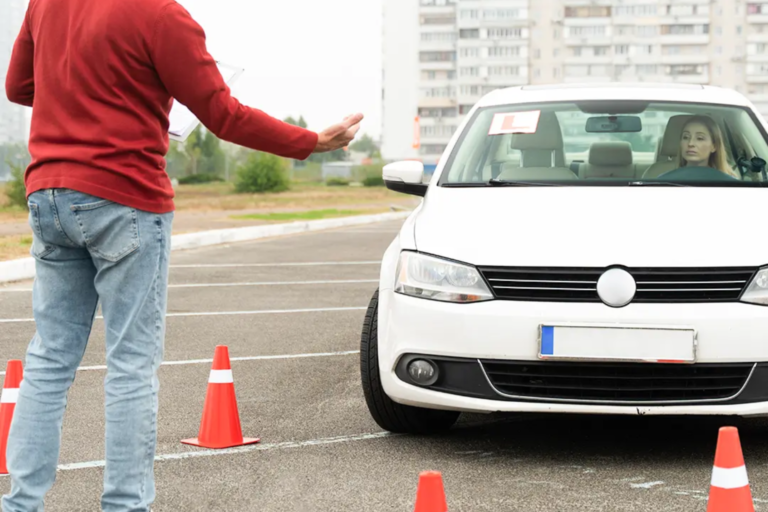
There’s a strange middle ground in learning to drive. You’re no longer a complete beginner, but you don’t quite feel like a “driver” yet either. You can handle the basics, sure—but there’s still that slight hesitation, that extra second of thinking before you act.
And honestly, that phase is where the real growth happens.
It’s not flashy. It’s not dramatic. But it’s where things start to connect in a deeper way.
When Practice Stops Feeling Like Practice
At first, everything feels intentional. You remind yourself to check mirrors, signal properly, ease into turns. It’s almost like following a script.
But over time, especially through consistent in-car training, those actions begin to shift. They don’t feel like instructions anymore—they feel like habits.
You don’t think, “Check mirror now.” You just do it.
And that small change? It’s bigger than it seems. Because once your mind isn’t busy managing every detail, it can focus on something more important—awareness.
The Road Teaches What Lessons Can’t
There’s only so much you can learn in theory. Real understanding comes from being out there, dealing with actual situations.
An unpredictable driver cutting in. A sudden stop in traffic. A confusing intersection where everyone seems unsure of what to do.
These moments can’t be fully simulated, but they can be practiced.
And the more you experience them, the less intimidating they become. You start recognizing patterns. You react faster, but also more calmly.
It’s not about controlling everything—it’s about adapting.
Testing Yourself Before the Test
There’s something about the word “test” that changes everything.
Even if you’re comfortable driving, the idea of being evaluated can make you second-guess yourself. Simple actions suddenly feel heavier. You become more aware of every move.
That’s why mock road tests are so useful. They recreate that pressure in a controlled way, giving you a chance to experience it before it actually counts.
And here’s the interesting part—most people realize they’re more capable than they thought.
Because once you’ve faced that pressure a few times, it loses its edge.
The Subtle Art of Getting Better
Improvement in driving doesn’t always feel obvious.
You don’t wake up one day suddenly “better.” Instead, it happens quietly. You handle a tricky situation more smoothly. You notice something earlier than you would have before. You recover from a small mistake without panicking.
This kind of skill improvement is gradual, almost invisible.
But it’s steady.
And over time, those small adjustments build into something solid—something you can rely on.
Why Mistakes Still Matter
Even at this stage, mistakes don’t disappear.
You might misjudge a gap. Brake a little too late. Take a turn that feels slightly off. It happens.
The difference now is how you respond.
Instead of getting flustered, you correct. You move on. You learn.
And that shift—from reacting emotionally to responding calmly—is a sign of real progress.
Confidence Isn’t Loud
A lot of people think confidence in driving means being bold, fast, or completely fearless.
But real confidence is quieter.
It’s the ability to stay calm in uncertain situations. To trust your judgment without rushing. To give yourself time to make the right decision, even when others seem impatient.
It doesn’t draw attention to itself. But it’s there, steady and reliable.
Finding Your Own Flow
Driving has a rhythm to it.
At first, you’re out of sync. Everything feels slightly off—too slow, too fast, too uncertain. But gradually, you find your pace.
You learn when to merge, when to wait, when to adjust. You stop forcing decisions and start responding naturally to what’s happening around you.
And once you find that flow, driving feels less like a task and more like a process you’re part of.
The Pressure of “Being Ready”
There’s often a question that lingers in the background: “Am I ready?”
Ready for the test. Ready to drive alone. Ready to handle real traffic without guidance.
And the honest answer? You might never feel completely ready.
But readiness isn’t about feeling perfect. It’s about being capable enough to handle situations safely—and knowing you can adapt when things don’t go exactly as planned.
That’s what matters.
When It All Comes Together
There’s a moment—subtle, almost easy to miss—when everything starts to feel different.
You’re driving, and you’re not overthinking. Your movements feel natural. Your decisions come a little quicker, a little smoother.
You’re still paying attention, still learning—but you’re not struggling in the same way anymore.
That’s when it clicks.
Not all at once, not dramatically. Just… quietly.
Final Thoughts
Learning to drive isn’t a straight path from beginner to expert. It’s a series of small shifts, each one building on the last.
The middle phase—the one where things feel uncertain but promising—is where most of the real learning happens. It’s where habits form, confidence grows, and understanding deepens.
So if you’re in that space right now, wondering if you’re improving fast enough, take a breath.
You are.
Because every smooth turn, every calm decision, every moment where you handle something just a little better than before—it all adds up.
And eventually, without even realizing it, you’ll cross that line from learning to driving.
And it will feel completely natural.