It’s funny how something as ordinary as tap water can influence so many household chores. When glasses come out of the dishwasher covered in cloudy spots or a freshly cleaned shower develops chalky deposits within days, maintaining your home starts to feel like an uphill battle. Hard water is often the culprit behind these familiar frustrations.
For homeowners in Pekin and surrounding communities, investing in appropriate water treatment for hard water can help address these recurring problems at their source rather than constantly dealing with their consequences.
Modern water softening technology offers several practical advantages, including systems that adjust regeneration according to actual household consumption. Understanding how these systems work can help you make a better decision for your home and budget.
Why Hard Water Makes Everyday Life More Complicated
Hard water contains dissolved minerals, primarily calcium and magnesium, which water naturally absorbs as it moves through soil and rock formations.
Although these minerals aren’t generally considered harmful to health, they can create problems around the house. When water evaporates or is heated, mineral deposits may remain behind, gradually accumulating on surfaces and inside equipment.
Appropriately selected softening systems for household water help reduce these hardness minerals before they circulate through plumbing fixtures and appliances.
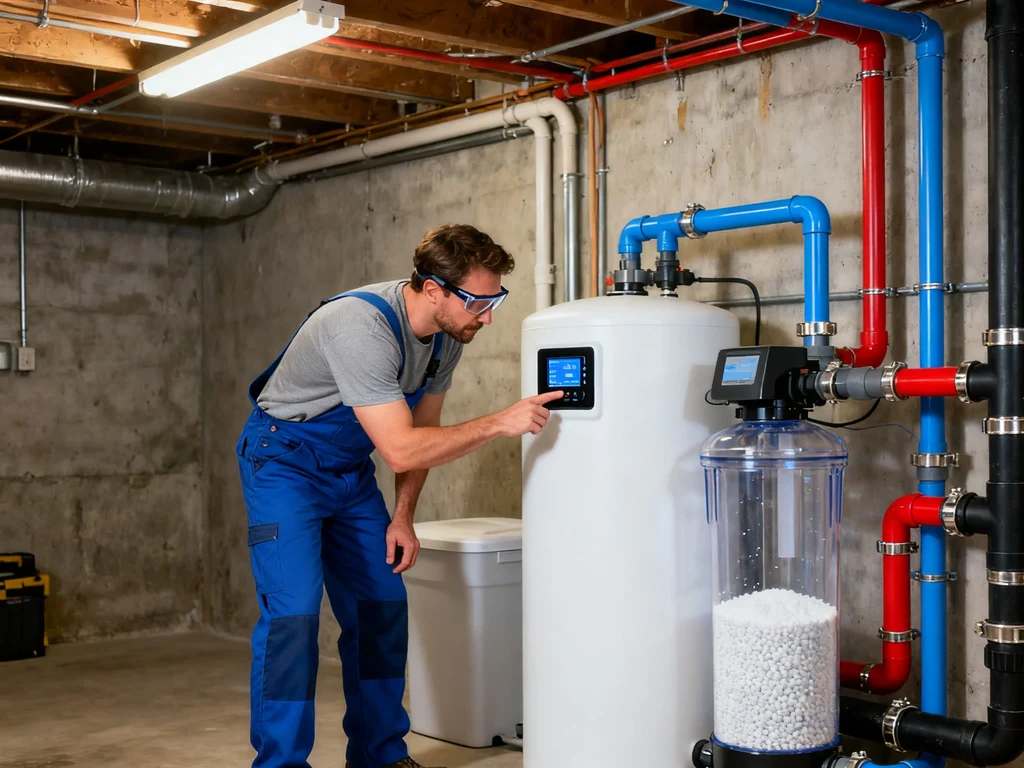
Conventional softeners accomplish this through ion exchange, using special resin beads to exchange calcium and magnesium ions for sodium or potassium ions.
This process helps limit new scale formation while improving how soap interacts with water.
For households constantly battling mineral buildup, addressing hardness directly can be far more practical than purchasing another collection of cleaning products.
What Makes Demand-Based Water Softening Different?
Older timer-based softeners typically regenerate according to a predetermined schedule, regardless of how much water a household has actually consumed.
That arrangement doesn’t always reflect real life. Perhaps the family spends a week away on vacation, or relatives visit over the holidays, suddenly increasing water usage.
A demand-initiated water softener monitors water consumption and schedules regeneration based on the system’s calculated remaining treatment capacity.
This approach allows the equipment to respond more closely to changing household requirements. Under suitable conditions, it may also reduce unnecessary salt and water consumption compared with fixed-schedule regeneration.
Proper programming remains important, however. The system needs accurate hardness settings and suitable capacity to operate efficiently.
It’s a more responsive approach to a household resource that rarely gets used in exactly the same quantities every day.
Looking After the Appliances You Rely On
Nobody particularly enjoys shopping for a replacement water heater because the old one has stopped working unexpectedly.
Hardness-related deposits can gradually accumulate inside water-heating equipment, potentially interfering with heat transfer and increasing maintenance requirements.
Dishwashers and washing machines may also experience problems associated with mineral buildup.
Reducing water hardness helps limit additional scale formation, which can support more manageable appliance maintenance over time.
Of course, installing a softener won’t undo existing equipment damage. Appliances with substantial mineral accumulation may still need professional servicing.
Nevertheless, prevention makes sense. Taking steps to protect expensive household equipment today may help reduce avoidable maintenance problems tomorrow.
Discovering the Small Comforts of Softer Water
The benefits of water softening often become noticeable in surprisingly ordinary moments.
You might find that shampoo lathers more readily, glasses develop fewer mineral spots, and washing bathroom surfaces requires less effort. Freshly laundered towels may also feel different as hardness-related mineral accumulation decreases.
Softer water can initially feel slightly slippery during showers, especially if you’ve spent years living with hard water.
It’s worth adjusting soap and detergent quantities according to product recommendations rather than continuing to use the same amounts out of habit.
These changes probably won’t transform your entire lifestyle. Still, when you consider how frequently these little household tasks occur, even modest improvements can be genuinely worthwhile.
Choosing Equipment That Matches Your Family’s Needs
Water softener sizing deserves more attention than many homeowners realize.
An undersized system may exhaust its treatment capacity too quickly, while unnecessarily large equipment could introduce avoidable costs.
Consider measured water hardness, household occupancy, daily consumption, and peak flow requirements before choosing a system.
Think about busy mornings when several people are showering, someone starts the washing machine, and breakfast preparations are underway.
Your equipment should accommodate those demands without unnecessarily restricting water flow.
For Central Illinois homeowners, an appropriate water assessment can provide useful information for comparing available systems.
Ask about regeneration efficiency, salt requirements, replacement components, and warranty coverage. These practical details often matter more than impressive-looking product descriptions.
Keeping Your Water Softener Running Efficiently
Even modern, automated softening equipment requires occasional attention.
Monitor salt levels, follow manufacturer recommendations, and periodically check the condition of the brine tank.
Sometimes, salt forms a hardened crust that prevents proper brine preparation. Incorrect hardness settings or mechanical issues can also interfere with treatment performance.
If mineral deposits unexpectedly return, arrange an inspection before assuming the entire system needs replacing.
Periodic hardness testing provides a reliable way to evaluate performance and determine whether adjustments are necessary.
Maintaining a simple service record can help you stay organized without turning equipment upkeep into another demanding household responsibility.
Making a Smarter Investment in Better Water
For homeowners throughout Pekin and Central Illinois, managing hard water is ultimately about finding a solution that fits everyday life.
Start with accurate testing, select appropriately sized equipment, and consider technology that responds to your household’s changing water consumption.
Over time, the benefits may become apparent through easier cleaning, improved soap performance, and reduced mineral buildup.
A dependable water softener doesn’t need to demand constant attention. Ideally, it becomes one of those quiet household improvements that simply makes things easier.
And in a home where there’s always another chore waiting, that’s a rather welcome change.